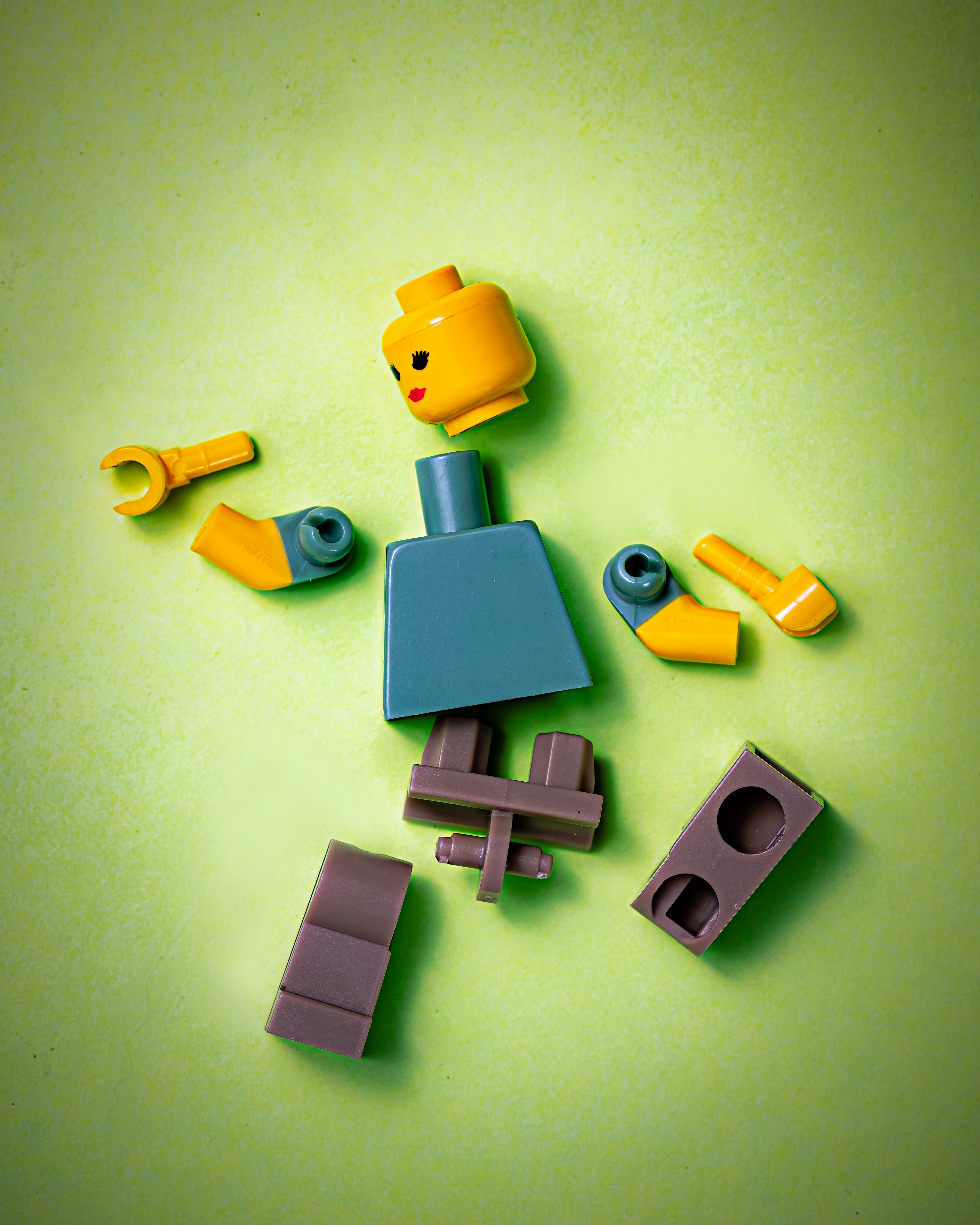
Most women don't just 'decide' to skip the healing work. They just get busy surviving to try to get thru the crappy time by whatever means necessary. I get it. We all want to run away, to numb it out. Some people jump into dating apps or wild nights on the town. Does this sound like you? Or you'rat work. Still showing up in the group chat. Telling yourself you're fine because you got out of bed, did your job, didn't cry in the bathroom today. Time passes. The sharp edge of it dulls. And at some point, without ever really deciding it, you decide you're done grieving. You've moved on.
I get it.. There's a funny quote I read that stuck with me and it pretty much summarized how I felt after one breakup;
"I’m not saying you’re the worst thing that ever happened to me, but you’re definitely in the top three -and the other two were natural disasters."
So, here's what I want you to sit with, because I really don't think enough people are saying it out loud: moving on and healing are not the same thing. Moving on is time passing. Healing is actual work you have to do on purpose. Skip the work and only let time pass, and the pain doesn't disappear. It goes underground, and from there it quietly starts driving your decisions. It's still there. But trust me, it's there waiting.
As for me, I've worked with enough women, in and after their own breakups, to recognize the pattern. And I've definitely confused moving on, leaving it all behind, with thinking I'm healed. Only to realize it created other unhealthy patterns. And there's real research behind every piece of it, not just what I've observed. So let's walk through what actually happens when you don't do the healing work. Then let's talk about what does.
Okay. Let's get into it...

1. You're still operating from old attachment wounds
Here's the one nobody wants to hear, because it sounds like it's your fault. It's not, and yet it's true. And the more we understand the role of our attachment style, the more we can understand our feelings, behavior, and patterns.
Research on adult attachment styles (to learn more I really love Thais Gibson!) and grief consistently shows that unresolved breakup distress doesn't just fade with time the way we assume it should. It gets carried forward, into the next relationship, and the one after that, showing up as anxiety, hypervigilance, or a fear of getting close that has nothing to do with the new person and everything to do with the last one. Your attachment wound doesn't know the relationship is over. It just knows it got hurt, and it's still bracing. You're still ruminating. Obsessing. Missing. Feeling empty.
I see this constantly in the women I work with. She'll tell me she's fine, she's dating again, she's not thinking about him anymore. And then she'll mention, almost as an afterthought, that she checks her phone the second it buzzes, or that she can't relax into a new relationship without waiting for the other shoe to drop, or that she feels a flicker of panic when someone goes quiet for a day. Or she dates someone a short period of time and falls head over heels thinking it's real. Then they break it off because it's too much too soon and she's absolutely destroyed, even though the relationship was very short. She's hurting way more than she knows she should because there's a compounding effect from unhealed past wounds. This is what happens when you sweep feelings under the rug. One strong gust of wind is going to blow up all the dirt and grime below. She's not being dramatic. These unhealed wounds can come back to the surface to haunt us without warning.
This is exactly why EFT is different from just talking it through. Tapping works on our emotional intensity and the nervous system, which is where an attachment wound and our learned responses actually live. Talking about it helps you understand it and connect the dots, so you know why you behave a certain way. But that's awareness, not the healing itself. We have to actually heal the wound and manage our responses to get past them. EFT tapping helps your body finally believe it's safe to stop bracing, to stop predicting the next catastrophe.

2. You tolerate what you shouldn't
If you've ever wondered why you stayed longer than you should have, said yes when you meant no, or accepted a version of love that was clearly not enough, this is usually why: unhealed pain quietly erodes your sense of what you're worth. Somewhere on a subconscious level, when someone treats us like we're not good enough, we spend our time trying to convince them otherwise. To demand that they treat us better. To beg that they treat us better. To repeat over and over again how we want to be treated. Except the red lines don't mean anything. Again, I've been there. What I know now is that a healed person doesn't allow it. They will set the boundary. And not waste their time.
“Poisonous relationships can alter our perception. You can spend many years thinking you're worthless. But you are not worthless. You're underappreciated.“ — Steve Maraboli [1]
Maybe you're starting to look at your patterns and realize that you've done this. But why? Research on low self-esteem and relationship patterns describes something researchers call relationship sabotage, a cluster of behaviors that includes staying past the point you knew you should leave, and settling for less because some part of you doesn't believe you're allowed to ask for more.
That's an unhealed belief wound, and it will keep shaping your choices until you address it directly. You've probably already tried arguing with it, telling yourself logically that you deserve better. EFT works differently. It releases the emotional charge sitting underneath the belief, the actual felt sense of "I'm not enough," so the belief loses its grip instead of just getting argued with.

3. You're still trying to convince people to love you
This one is subtle, and it's exhausting once you see it. Do you find yourself over-explaining? Over-giving? Making yourself easy, agreeable, low-maintenance, whatever you think might make you worth choosing? That's usually what it looks like when your sense of worth feels conditional. You stop receiving love and start performing for it. As I mentioned above, you take it upon yourself to prove them wrong. Convince them of your worth. You try to be more understanding, more helpful, more available, more accommodating. And yet they don't start treating you better.
Some people would label you as 'needy' without really understanding what's happening. Some part of you is still trying to close a much older case, one about a belief that love has to be earned, and the last relationship just happened to be where it surfaced.
“Never beg for a relationship. Be brave to accept the one who really wants to be with you and reject the ones who just pretend to be with you.” — Unknown
You can usually trace it further back than you'd expect. Ask most women when they first learned to make themselves smaller or easier to love, and the relationship that just ended is rarely where the story starts. It's often a parent who was only warm when you achieved something, or a childhood home where love felt conditional on good behavior, accolades, being helpful, or getting attention. The thing is, your latest breakup didn't create that wound. But it just poked at it or ripped it open, making it impossible to ignore.
The tapping work here goes straight at that belief. You probably already know, on some level, that you're worthy. This releases the self-doubt that keeps your body acting like you're not. Tapping can be the shift you need to change the belief that you're hard to love or that you deserve less.

4. You attach way too early
If you've ever gotten attached to someone within a few dates (and immediately start planning your future with them) and then watched them slowly back away, this could why. Fast, intense attachment is a well-documented feature of anxious attachment style, and it tends to have the opposite effect of what you're hoping for. Instead of pulling someone closer, it often pushes them away, because what they're picking up on is urgency more than connection.
That urgency comes from your heart (and nervous system) trying to secure safety and override your rational brain as fast as possible, because some earlier version of you learned that connection can disappear without warning. It has very little to do with the actual person in front of you. It can send you into an absolute panic. It can create a sense of painful rejection that
"Self-soothing is the act of creating internal safety when the world around you feels overwhelming or threatening."— Dr. Nicole LePera (The Holistic Psychologist)
This is exactly where EFT comes in. You tap through the self-doubt. The anxiety. The fear of losing them before you've even really had them. You tap on your own self-love, until you're genuinely okay being alone, and okay knowing that this person might not be able to give you what you need. When you're not terrified of losing something you just found, you attach at a normal pace, because the urgency was never really about them to begin with.

5. You fall in love too fast, then get destroyed when someone loses interest
So here's the flip side of the last one, and it's brutal. Have you ever met someone, felt something intense and immediate, and caught yourself already picturing a future? And then watched them pull back, or lose interest, or just fade out the way people do now? It doesn't feel like a mild disappointment when that happens. It feels like losing a relationship you were actually in.
Psychologists have a name for that obsessive, all-consuming early intensity: limerence. It feels exactly like love, but it's not the same thing, and it's often intensified by unresolved emotional wounds rather than by how compatible you actually were with that person. Your nervous system, still looking for the resolution it never got from the last heartbreak, latches onto anything that offers intensity, and mistakes that intensity for meaning.
“Limerence is, above all else, mental activity. It is an interpretation of events, rather than the events themselves. You admire, you are physically attracted, you see, or think you see (or deem it possible to see under "suitable" conditions), the hint of possible reciprocity, and the process is set in motion”― Dorothy Tennov, Love and Limerence: The Experience of Being in Love
This is why the crash afterward feels so disproportionate. You're grieving the fantasy your unresolved nervous system built in record time, not just a few dates. EFT helps here because it addresses the underlying activation, the felt sense of desperately needing this to work, so you're not building entire futures on the first spark of chemistry.

6. You rebound to outrun the pain
Getting back out there feels productive. It feels like progress. Sometimes it even feels good, for a while.
But research on breakup recovery has found that rebounding is linked to more rumination, not less, and to slower personal growth after a breakup, not faster. That tracks with what I see constantly: a new relationship can distract you from the pain, but it can't process it for you. The grief is still there, just quieter, and it tends to surface eventually, often in the new relationship, at the worst possible time.
When you learn how to soothe your own nervous system, you take back the power that you used to hand over to external circumstances."— Jessica Baum
This is the difference between distraction and healing. A rebound gives you somewhere else to put your attention. EFT actually moves the emotional material that's sitting there waiting to be dealt with, so you're not carrying it forward disguised as a new relationship.

7. You keep choosing the same dynamic in a different person
This is the pattern that finally gets women to reach out to me, more than any other. Different person, same story. The same over-giving. The same slow erosion of yourself. The same ending, dressed up slightly differently. This has nothing to do with bad luck or bad taste in people. Your wound driving the pattern never got addressed, so it keeps recreating the conditions that match it. You will keep meeting the same dynamic, wearing a different face, until the underlying pattern itself gets worked with directly.
I've watched women swear they've learned their lesson, that this next one is different, and then describe a relationship with the same shape as the last three. They did learn something. Insight and healing just aren't the same thing, and you can have all the insight in the world while an unhealed pattern still decides what you do next. The pattern doesn't care what you've figured out in your head. It only responds to what's actually been released in your body.
This is the whole reason EFT is the center of my work instead of just one tool among many. It doesn't just help you get over one person. It goes to the pattern underneath, so the story actually changes, not just the name of the person in it.

The one you're still not over
There's an eighth thing I want to name here, because it comes up in almost every conversation I have with women who haven't done this work: the one that got away. Is there one? The relationship you can't quite explain, the person you catch yourself measuring everyone new against, the ache that shows up at eleven at night for someone you haven't spoken to in years?
Here's what's actually happening. Your brain has two habits that work against you here. The first is something researchers call the fading affect bias: negative emotions from a memory fade faster than positive ones. Over time, without you doing anything at all, your brain quietly edits the relationship, smoothing out the hard parts and polishing the good ones, until what you're remembering isn't quite what actually happened.
The second is the Zeigarnik effect, and it might be the more important one. Our brains are wired to keep unfinished business active in memory, because part of us is always looking for a way to close the loop. A relationship that ended cleanly, with clarity and closure, tends to fade the way memories are supposed to. A relationship that ended in confusion, or silence, or without a real explanation, stays vivid, simply because it's unresolved, not because it mattered more.
That means the person you're still holding onto might not be someone you're missing so much as an open loop your nervous system hasn't been able to close. The version of them you're carrying is often not accurate anymore, if it ever was. It's an edited highlight reel attached to an ending that never got to finish.
Think about the relationships in your past that don't ache anymore. Did most of them end with some kind of clarity? You knew why. You said what needed saying, or you got an answer, even a disappointing one. Now think about the one that still gets you at eleven at night. Did that one end differently? Silence, maybe. Half an explanation. A slow fade you never got closure on. If so, that's not a coincidence. That's the loop your brain is still trying to close.
I'm going to write a full piece just on this, because it deserves more space than I can give it here. But I wanted you to see it as part of this list, because it belongs here. It's one more thing that happens when the healing work doesn't happen: an open loop stays open, sometimes for years, and you mistake the ache of an unfinished ending for proof that they were the one.

Why EFT specifically?
I want to be direct about why I keep coming back to the same tool across every single one of these. I know I talk about it in every article but there's a reason why. EFT, or Emotional Freedom Techniques, is a mind-body method that combines tapping on specific points on the body with naming what's actually true for you emotionally. It has more than 100 published clinical trials behind it at this point, and one of the most cited findings is a replicated 43 percent drop in cortisol after a single session. That's not a small effect. That's your nervous system visibly calming down in real time.
Here's the part that matters most for everything I just walked through. Every single thing on this list, the attachment wounds, the tolerating, the over-giving, the fast attachment, the crash when someone pulls away, the rebounding, the repeating pattern, the open loop with the one that got away, gets stored as a nervous system response, something your body reacts to automatically, faster than you can think your way through it. That's why understanding your patterns intellectually so often isn't enough to change them. You can know exactly why you do what you do and still do it, because your nervous system reacts to danger cues on its own timeline, one that doesn't check in with what you've already figured out.
EFT works at the level where the wound actually is. Instead of asking you to think your way out of a feeling, it gives your body a way to finally release what it's been holding, so the pattern can actually change instead of just being understood.
What to do with this
None of the seven things on this list, or the eighth one I'm holding for its own article, are proof that something is wrong with you. They're what an unhealed nervous system does by default, every time, for every woman who's ever gone through this. You are not broken. You are not too much. You are not uniquely bad at relationships. You are carrying something that never got released, and it keeps repeating because nothing has interrupted it yet.
Naming the pattern is the first step. It's the part you just did, by reading this far. The second step is the actual release, and that's the part most approaches skip entirely, because most approaches only work at the level of the mind.
If you want a real taste of what that release actually feels like, I put together a free 3-day EFT experience. It's not a webinar and there's nothing to schedule. One session a day, delivered straight to your inbox, done in complete privacy, at your own pace. No pressure, no pitch buried in it, just the actual work.
Start the free 3-day experience →
You've tried understanding it. You've tried talking it through. You've tried waiting it out. If none of that has fully worked, that's not a reflection of how hard you tried. None of those approaches were built to reach where this actually lives. This one is.
ABOUT ME: Andrea Hunt is a Heartbreak to Healing EFT Empowerment Coach based in Munich, Germany. She helps women heal after heartbreak and belief wounding, rebuild confidence, and restore self-trust. Her work focuses on emotional resilience, solo travel after a breakup, and guiding women from heartbreak to expansion.
RESOURCES:
✨ Start the Free 3-Day EFT Experience: https://events.dreahunt.com/heartbreak-workshop-aug-2026
💛 Free EFT Tapping Heartbreak Guide: https://snipr.is/A89rTcU
Get my book on Amazon Kindle: From Heartache to Healing: How EFT Tapping Can Mend a Broken Heart: https://amzn.to/4fzLPP8
📞 Book a Discovery Call (Travel Coaching After a Breakup or EFT for Confidence): https://events.dreahunt.com/book-a-call
HEADER PHOTO: Photo by Jackson Simmer on Unsplash
More like this...


Emotional Gravity: Why You Keep Getting Pulled Back to the Same Kind of Pain
Behavioral expert Chase Hughes calls it emotional gravity: the reason you keep getting pulled toward the same kind of pain. It's not your intuition. It's your nervous system mistaking familiar for safe. Read the full breakdown.
read more
5 Red Flags Your Ex Showed You That Should Make You Glad You Walked Away
Missing your ex and wondering if you made the right call? These 5 red flags are a reminder of what was actually there, and why walking away was the right thing, even when it doesn't feel like it yet.
read more
Why Can't You Get Over Them? 5 Reasons You're Still Not Over Your Ex
Do you still feel like you're not over your ex even though it's much later? Here are 5 reasons why you might be stuck..
read more