The 9 EFT Tapping Points: What Each One Does and Why They Help You Heal Heartbreak
Let's just be honest about something. The first time anyone sees EFT tapping, it looks weird. You're tapping on your face and collarbone while talking about your breakup, and somewhere in the back of your mind a voice is going "is this a real thing I feel kinda dumb."
I get it. I had the same reaction the first time I came across it during finals week years ago, mid-anxiety attack, completely desperate for anything that would help me sleep. But here's what I learned pretty quickly, and what I want you to know if you're skeptical: those tapping points aren't random, the technique isn't some fringe self-help trend, and there's actually a growing body of clinical research behind why this works.
So let's talk about what each of the 9 acupressure points is connected to, why certain points matter more depending on what you're dealing with, and what the science actually says about all of it. Especially when it comes to heartbreak.

First, Why Does Tapping Even Work?
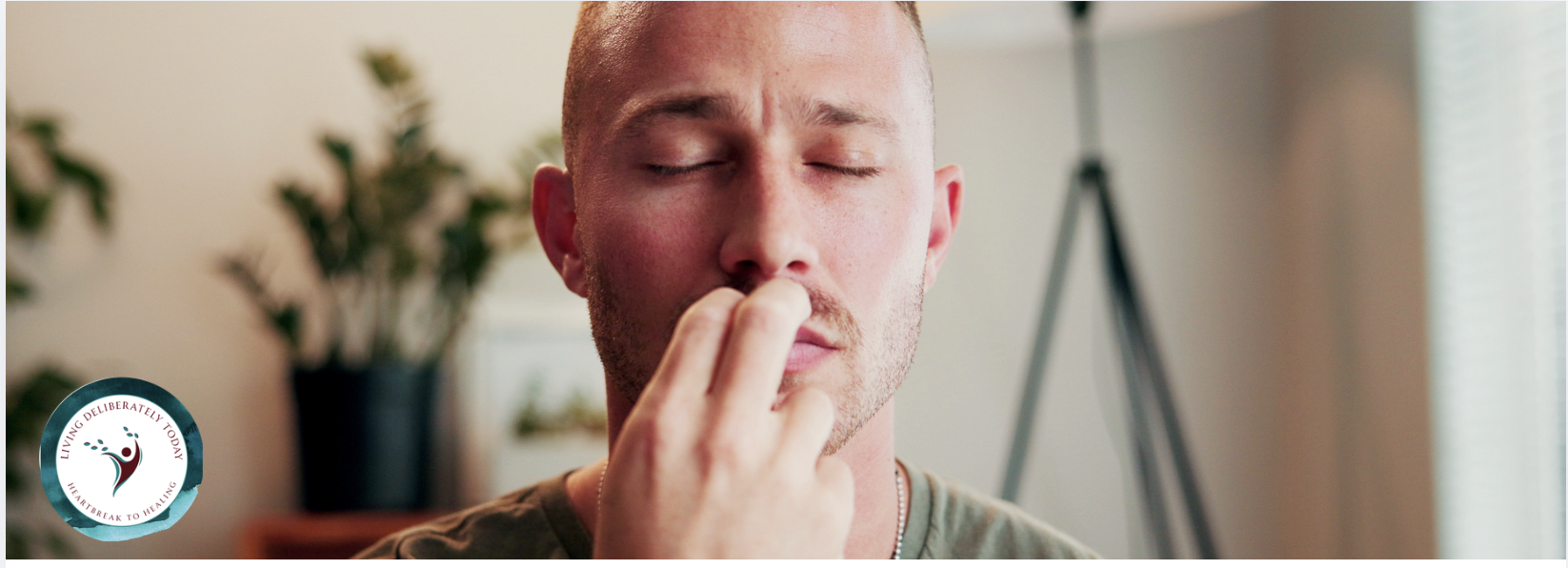
EFT (Emotional Freedom Techniques) combines two things: gentle tapping on specific acupressure points on the face and upper body, paired with focused attention on whatever emotion or memory is causing you stress. These are the same points used in acupuncture and acupressure for thousands of years, but instead of needles, you're using your fingertips.
The reason this combination works isn't mystical. It's neurological.
When you tap on these points while thinking about something painful, you're essentially sending two messages to your brain at the same time. The first message is "yes, this thing happened, it hurt, and I'm acknowledging it." The second message, delivered through the physical tapping, is "but you're safe right now." That combination calms the amygdala, which is the part of your brain that controls your fight-or-flight response. Over time, the emotional charge around the memory or belief starts to soften.
Dr. Dawson Church, who has led much of the clinical research on EFT, found in a randomized controlled trial that a single hour of tapping reduced cortisol (the body's primary stress hormone) by 24 percent. The talk therapy group in the same study saw only a 14 percent drop. Dr. Peta Stapleton, an associate professor at Bond University in Australia and one of the leading EFT researchers in the world, has used fMRI brain scans to show that tapping actually reduces activity in the limbic system, the emotional center of the brain.
So no. It's not magic. It's measurable. There are now over 200 published clinical trials on EFT, and a 2023 meta-analysis published in Frontiers in Psychology confirmed that EFT meets the criteria of the American Psychological Association as an empirically validated treatment for PTSD.
This isn't fringe anymore. And clinical psychologists like Dr. Damon Silas, who specializes in trauma, PTSD, and grief, have actually started turning to EFT after watching traditional talk therapy re-traumatize their patients. As he's written about openly, having clients dig up painful memories and talk through them in detail often made things worse, not better. EFT gave him a way to help people release the emotional charge without forcing them to relive every detail.
Why Certain Points Matter More for Different Things
Here's where it gets interesting and where most basic EFT articles fall short.
Each of the acupressure points sits along an energy pathway that, in traditional Chinese medicine, has been associated for centuries with specific emotional patterns and physiological functions. So when you're working through something heavy like heartbreak, some points will feel more activating than others depending on what's coming up for you.
If you're working through anger, the side of the eye is going to do heavy lifting. If you're spiraling in anxiety at 2 AM, the under-eye and the collarbone point will probably be the ones that bring you back. If you're stuck in shame about how the relationship ended, the under-nose point is where the work happens.
You don't have to memorize all of this. But knowing what each point is connected to helps you understand why some rounds of tapping feel like nothing, and others feel like the floor opened up underneath you.
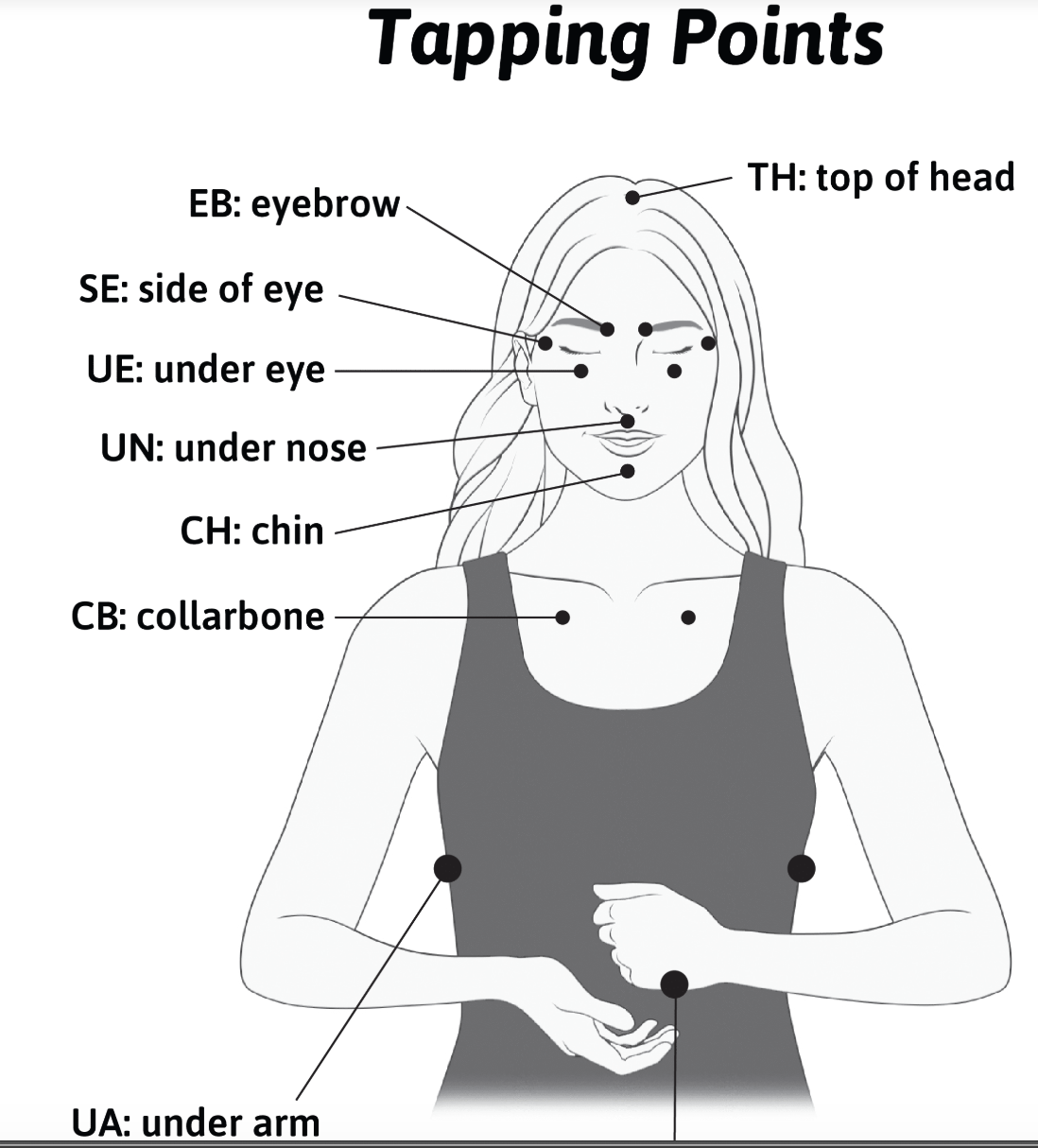
The 9 EFT Tapping Points
1. Side of Hand (Karate Chop Point)
Where: The fleshy outer edge of your hand, between the base of your pinky and your wrist.
What it's connected to: This is where every EFT round starts. You tap here while saying your setup phrase, which acknowledges what you're feeling and pairs it with self-acceptance. Something like "Even though I feel completely wrecked by this breakup, I deeply and completely accept myself."
The karate chop point was specifically chosen by Dr. Roger Callahan, the psychologist who developed the original tapping protocol in the 1970s and 1980s, to address what he called psychological reversal. That's basically your subconscious resistance to letting go of something. Have you ever wanted to feel better but somehow part of you couldn't stop holding on? That's psychological reversal in action. Callahan considered it one of his most important discoveries, and Gary Craig, who later simplified Callahan's protocol into what we now call EFT, kept it as the starting point of every round.
Why it matters for heartbreak: This is huge for breakups specifically. There's almost always a part of you that wants to move on and another part that's clinging to the relationship for dear life. Starting here loosens that grip before you even begin the rest of the sequence.
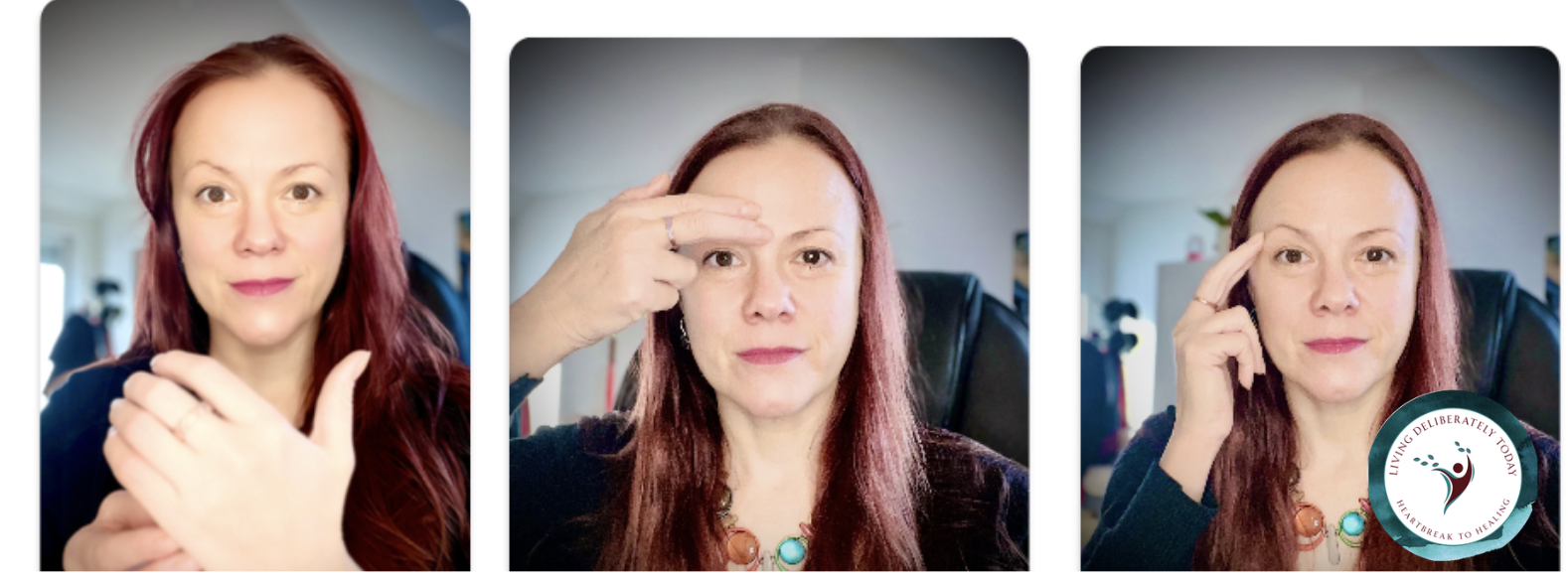
2. Top of the Head
Where: The crown of your head, where you'd put a small tiara.
What it's connected to: This point is associated in EFT practice with overall nervous system regulation and mental overload. Think of it as a reset button. When your thoughts are scattered, foggy, or looping endlessly, this is the point that helps bring everything back to center.
Why it matters for heartbreak: You know that 2 AM spiral where you're replaying conversations and rehearsing things you wish you'd said? That's where this point earns its keep.

3. Eyebrow Point
Where: The inner edge of your eyebrow, right where it meets the bridge of your nose.
What it's connected to: In EFT, this point is associated with fear, frustration, and the release of older emotional pain. It's often where the first real emotional shift happens in a tapping round.
Why it matters for heartbreak: If you've ever started crying unexpectedly while tapping, there's a good chance the eyebrow point is where it started. That's not a malfunction. That's release.
4. Side of the Eye
Where: On the bone at the outer corner of your eye.
What it's connected to: This point is associated in EFT with anger, resentment, and the kind of frustration you've been swallowing for too long.
Why it matters for heartbreak: This is the point for the anger you didn't let yourself fully feel. The dismissive comments you brushed off. The times your needs got minimized. The resentment you packaged up and stored away because you were trying to be the bigger person. After a breakup, this is often where the rage you suppressed during the relationship finally has somewhere to go.
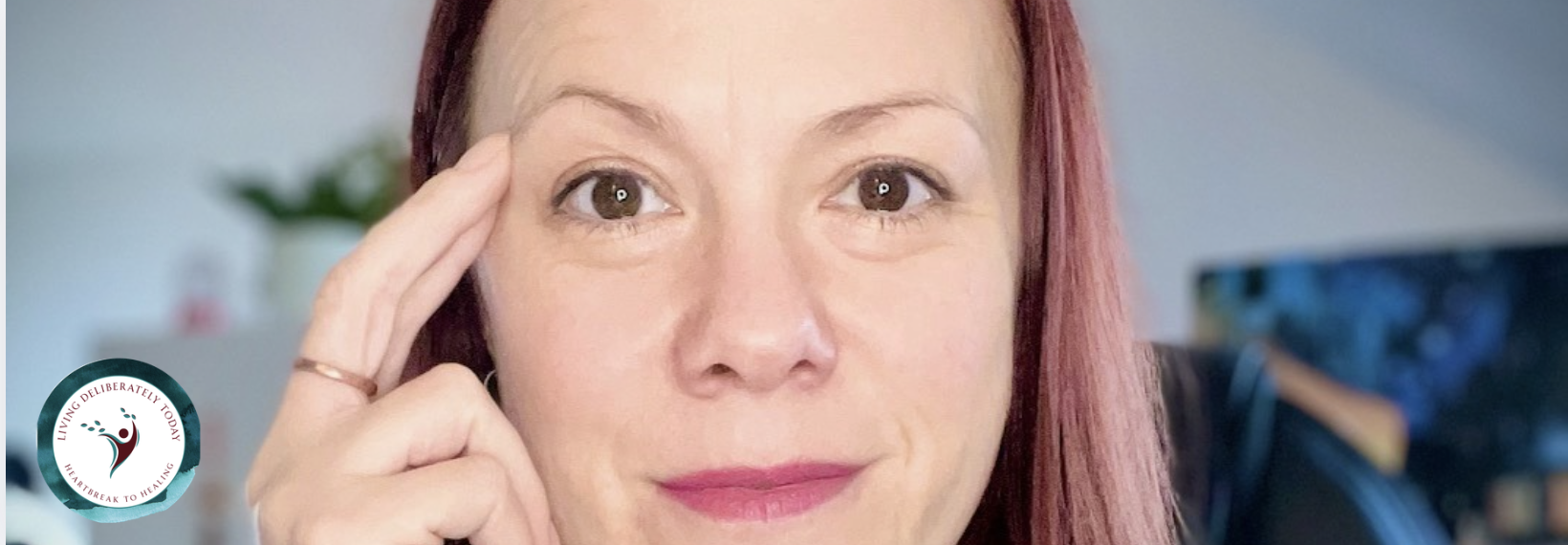
5. Under the Eye
Where: On the bone directly under the center of your eye, where the dark circles tend to live.
What it's connected to: Anxiety, worry, and the stomach-drop kind of fear. (Not a coincidence that this point sits near the stomach meridian in traditional Chinese medicine. The anatomy and the language line up.)
Why it matters for heartbreak: All that anticipatory anxiety after a breakup. What if I never meet anyone again? What if they move on faster than I do? What if I have to start over alone? This is the point where that low-level dread starts to soften.
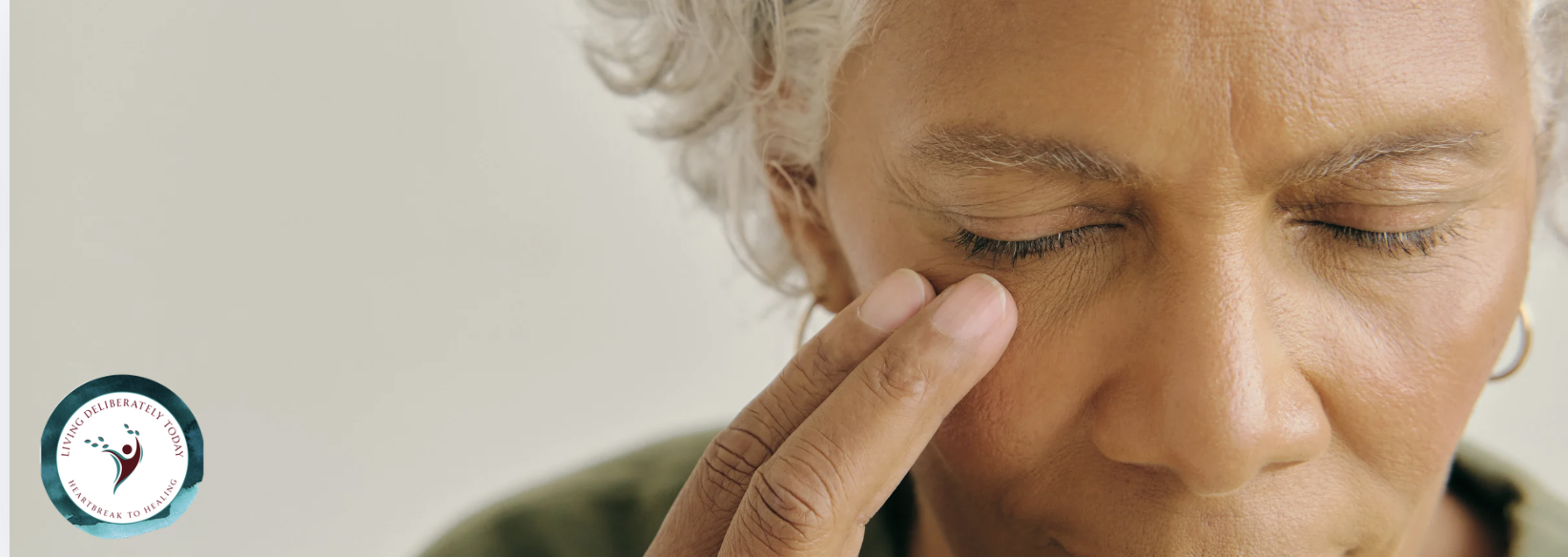
6. Under the Nose
Where: The little dip between your nose and your upper lip.
What it's connected to: Self-worth, embarrassment, and shame. It's small, but it tends to hold heavy things.
Why it matters for heartbreak: If you're carrying the belief that you weren't enough for them, or you're replaying conversations where you felt small or humiliated, this is the point you'll want to spend a little more time on. Shame is sneaky. It hides under "I'm fine" until you actually slow down enough to notice it.
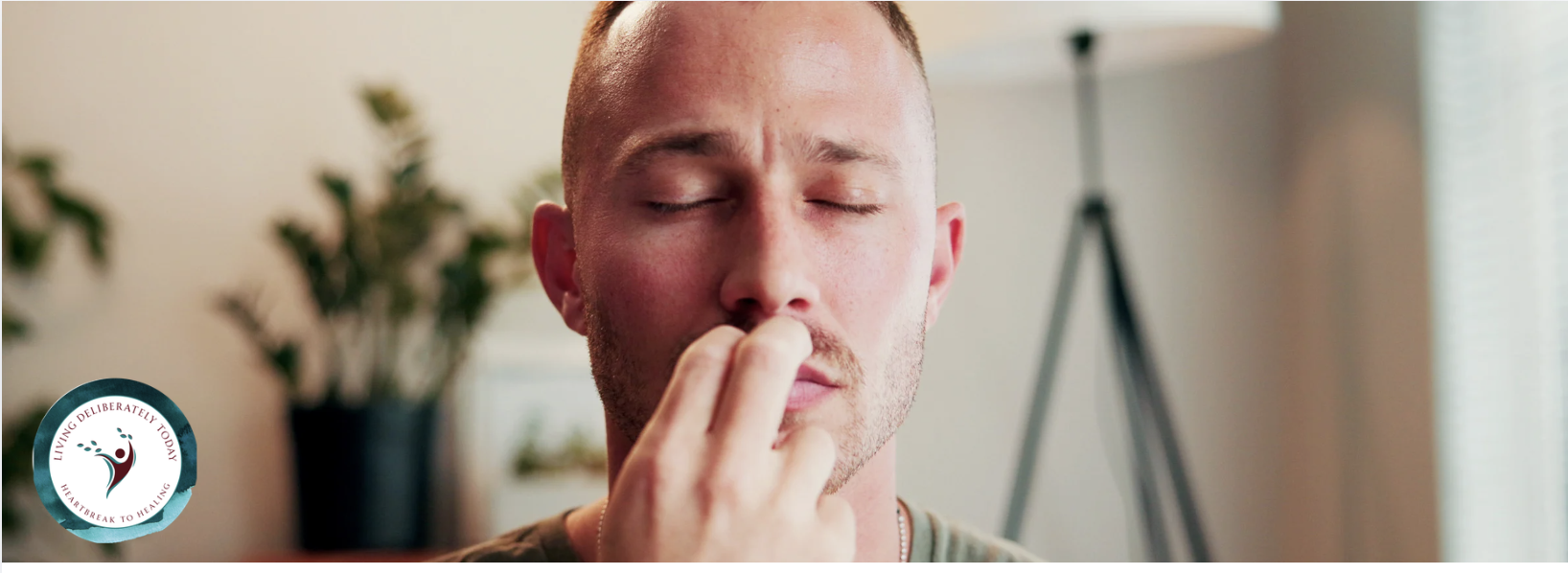
7. Chin Point
Where: The crease between your lower lip and your chin.
What it's connected to: Self-trust and confusion. The classic "how did I let this happen / why didn't I see it coming" feeling.
Why it matters for heartbreak: When your judgment feels broken, when you can't trust your own perceptions anymore because the relationship taught you not to, this point helps. It's where the questioning of yourself starts to quiet down a little.
8. Collarbone Point — The One to Spend Time On
Where: About an inch below where your collarbones meet, slightly off to either side.
What it's connected to: This is the point I want you to really pay attention to, because there's actual neuroanatomy backing up why it works so well.
The area just below the collarbone is densely connected to the vagus nerve, which is the main highway of your parasympathetic nervous system. Your parasympathetic nervous system is the "rest and digest" branch of your autonomic nervous system, the one that calms your body down after stress. When you tap near the collarbone, you're stimulating mechanoreceptors in the skin that send signals to the vagus nerve, which then activates the parasympathetic response. Heart rate slows. Cortisol drops. Your body shifts from "something is very wrong" to "you're safe."
This is exactly the system that goes haywire after a breakup. The grief feels physical because it is physical. Tight chest, can't breathe, heart pounding, that hollow feeling in your stomach. Your nervous system is stuck in fight-or-flight, and your body doesn't know the difference between a tiger in the woods and a text message that's not coming.
Why it matters for heartbreak: When you're having one of those moments where the grief feels like it's going to swallow you, this is the point to tap on. Just this one. You don't need a full sequence. Two fingers, just below the collarbone, both sides if you can, gentle rhythmic tapping for 30 to 60 seconds. Most people start breathing deeper without even noticing. That's your vagus nerve doing its job. Let it.

9. Under the Arm
Where: About four inches below your armpit, level with your bra strap if that helps you find it.
What it's connected to: In EFT practice, this point is associated with long-standing worry, emotional fatigue, and the kind of tired that no amount of sleep fixes.
Why it matters for heartbreak: This one tends to land hardest with the over-functioners, the people-pleasers, and the women who held everything together for everyone else in the relationship. If you've been someone's emotional support animal for years and you're finally starting to put yourself first, this point will probably matter to you a lot.
How to Actually Tap Through the Points
Once you've done your setup phrase three times on the karate chop point, you tap through the rest of the points in sequence. About 5 to 7 taps per point, though it doesn't need to be exact. While you tap, you say a short reminder phrase that keeps you focused on what you're working on. Something like "this heartbreak" or "this anger" or "this fear of being alone."
You're not trying to argue yourself out of the feeling. You're not forcing positivity. You're acknowledging what's there while sending calming signals to your nervous system. That combination is what makes the emotional charge soften.
Before you start, rate the intensity of what you're feeling on a scale of 0 to 10. After one round (about two minutes), check in again. If it's still high, do another round. If it shifted, you can either move on to a different angle of the same issue or stop and let your system integrate.
A Quick Note on Self-Care vs. Professional Support
EFT is genuinely powerful as a self-help tool, and most people can use it on their own with real benefit. But I want to be honest with you: if you're working through serious trauma, complex grief, or PTSD, working with a trained practitioner or a therapist who uses EFT is going to get you further, faster.
Dr. Damon Silas and other clinicians who use EFT in their practice are pairing it with deeper trauma work, not replacing therapy with tapping. There's a difference between using EFT to take the edge off a hard week and using it to process years of relational damage. Both are valid. They just look different.
Where to Go From Here
If you're new to tapping and want a guided way in, I have a free EFT guide specifically for heartbreak and emotional release that walks you through the points step by step. You can grab it here.
If you'd rather work through something specific with one-on-one support, you can book a free discovery call and we can talk about whether EFT coaching is the right fit for what you're carrying right now.
The points are just the doorway. What you do with them is where the real change happens.
ABOUT ME:
Andrea Hunt is a Heartbreak to Healing EFT Empowerment Coach based in Munich, Germany. She helps women heal after heartbreak and belief wounding, rebuild confidence, and restore self-trust. Her work focuses on emotional resilience, solo travel after a breakup, and guiding women from heartbreak to expansion.
RESOURCES: 💛 Free EFT Tapping Heartbreak Guide: https://snipr.is/A89rTcU
Get my book on Amazon Kindle: From Heartache to Healing: How EFT Tapping Can Mend a Broken Heart: https://amzn.to/4fzLPP8
Get my Free Guide 10 Ways you know you’re ready to travel after a breakup: https://snipr.is/h8KepU3
📞 Book a Discovery Call (Travel Coaching After a Breakup or EFT for Confidence): https://events.dreahunt.com/book-a-call
References
Bach, D., Groesbeck, G., Stapleton, P., Sims, R., Blickheuser, K., & Church, D. (2019). Clinical EFT (Emotional Freedom Techniques) improves multiple physiological markers of health. Journal of Evidence-Based Integrative Medicine, 24, 1-12.
Church, D., Yount, G., & Brooks, A. J. (2012). The effect of Emotional Freedom Techniques on stress biochemistry: A randomized controlled trial. Journal of Nervous and Mental Disease, 200(10), 891-896.
Church, D., Hawk, C., Brooks, A. J., Toukolehto, O., Wren, M., Dinter, I., & Stein, P. (2013). Psychological trauma symptom improvement in veterans using Emotional Freedom Techniques: A randomized controlled trial. Journal of Nervous and Mental Disease, 201(2), 153-160.
Craig, G. (2011). The EFT Manual (2nd ed.). Energy Psychology Press. (Note: Craig built EFT on the earlier Thought Field Therapy work of Dr. Roger Callahan, who originally identified psychological reversal in the 1980s.)
Nelms, J. A., & Castel, L. (2016). A systematic review and meta-analysis of randomized and nonrandomized trials of Clinical Emotional Freedom Techniques (EFT) for the treatment of depression. Explore, 12(6), 416-426.
Porges, S. W. (2011). The polyvagal theory: Neurophysiological foundations of emotions, attachment, communication, and self-regulation. W. W. Norton & Company.
Silas, D. (n.d.). Free from trauma: Use this incredible tool to understand, overcome and heal your trauma. Damon Silas Psychology. Retrieved from damonsilaspsychology.com
Stapleton, P., Buchan, C., Mitchell, I., McGrath, Y., Gorton, P., & Carter, B. (2019). An initial investigation of neural changes in overweight adults with food cravings after Emotional Freedom Techniques. OBM Integrative and Complementary Medicine, 4(1), 010.
Stapleton, P. (2019). The science behind tapping: A proven stress management technique for the mind and body. Hay House.
Sebastian, B., & Nelms, J. (2017). The effectiveness of Emotional Freedom Techniques in the treatment of posttraumatic stress disorder: A meta-analysis. Explore, 13(1), 16-25.
More like this...



Galloping Into Freedom: Your Guide to the Year of the Fire Horse 2026
Year of the Fire Horse 2026 guide: Chinese zodiac predictions, post-breakup healing, EFT tapping rituals & how to step into your power this Chinese New Year.
read more
Why You Should Hire a Heartbreak & Empowerment Coach for Your Breakup Recovery
Healing after a breakup isn’t just about time passing. Heartbreak recovery coaching using EFT tapping helps you process emotional pain, calm the intensity, and rebuild confidence as you move forward.
read more
The 9 Stages of Breakup Grief and How to Get Your Confidence Back
Breakup grief isn't linear. Learn the 9 real stages of heartbreak recovery and how EFT tapping helps you process emotions, rebuild confidence, and heal faster.
read more