
Why Can't You Get Over Them? 5 Reasons You're Still Not Over Your Ex
You know it's over. You've known for a while, maybe since before it actually ended. And yet here you are, still thinking about them, still replaying the same conversations, still checking their social media even though it never, not once, makes you feel better. You want to move on. Part of you is desperate to move on. And you genuinely cannot figure out why you haven't.
If that's where you are right now, I want to say something before we get into this: there's nothing wrong with you for still being here. Heartbreak doesn't follow a schedule, and the people around you who seem confused about why you're still not over it don'tactually understand how grief works. You loved someone. That was real. And whatyou're carrying right now is real too.
But there are specific reasons why some people stay in the loop longer than others, and understanding them is genuinely useful. Not in a "now I understand so now I can stop" way, because it doesn't work like that. But in a "now I can stop blaming myself and start actually doing something about it" way. So here are five of them.
“Sometimes good things fall apart so better things can fall together.” — Marilyn Monroe

1. You're Not Missing Them. You're Missing the Version of Them Your Mind Created.
This is one of the hardest things to sit with, but it might be the most important thing in this entire article, so I want you to really read it. After a breakup, the mind does something that feels completely natural but is actually making everything significantly worse. It curates. It selects. It goes through the entire history of the relationship and pulls out the best moments, the warmest memories, the version of this person at their most loving and present and everything you needed them to be, and it plays that reel on repeat. And because that reel is all you'reseeing, the loss feels enormous. Of course it does. You're grieving a beautiful thing
“I am beginning to feel like the only way to truly get over someone that you cared a lot about is to start a new chapter.” — Mindy, The Mindy Project
The relationship also had the days they pulled away without explanation. The times you felt unseen or dismissed or like you were asking for too much just by having needs. The moments where you overrode your own gut feeling to keep the peace, to not make things awkward, to give them another chance. The version of yourself you quietly made smaller over time to fit into what was being offered. When you miss them, it'sworth asking honestly: which version of them are you missing? Because what most people are grieving isn't the actual relationship as it was on an ordinary Tuesday. It's the potential of it. The best-case version. The person they were on the best day, in the best light, at their most available.
Letting go of that image is its own grief, sometimes a bigger one than the loss of the relationship itself. Because it means accepting that what you had wasn't quite what you thought it was. EFT tapping is one of the most effective tools I know for this, not to make you stop caring or to erase the love, but to release the emotional charge that's keeping that highlight reel running. When the charge starts to move, the memories don't disappear. They just lose their grip. And for the first time ina long time, you can start to see the relationship more clearly.

2. Your Brain Is Trying to Solve an Equation That Has No Answer.
Why did they really end it? Was there something you did, something specific you said or didn't say, that changed things? Were there signs you missed? Could you have done something differently? Is there a version of events where this didn't have to happen? Ifyou've been going around that loop, you already know it doesn't produce answers. It just produces more questions, and the exhaustion of having asked them all so many times that you can recite them in your sleep.
Dr. Winch explains this in away that I think is genuinely relieving to hear. He says that heartbreak creates such dramatic emotional pain that the mind assumes the cause must be equally dramatic, so it keeps searching for one. Even when you've been given a clear and honest explanation for why things ended, the pain feels too enormous for that explanation to be sufficient, so the mind keeps digging. As he puts it: "Creating mysteries and conspiracies where none exist is a common response to romantic breakups. Our mind unconsciously assumes that if the emotional pain we feel is so dramatic, it must have an equally dramatic cause, even when it does not." You're not obsessing because you're irrational or because you can't let go. You're obsessing because your brain is in pain and pain demands explanation.
“If you truly want to be respected by people you love, you must prove to them that you can survive without them.” ― Michael Bassey Johnson, The Infinity Sign
The closure you're looking for, the conversation that finally makes sense of everything, the admission that would allow you to exhale and move forward, Dr. Winch is very direct about this: no rationale can take away the pain you feel. The explanation you need doesn't exist, not because the truth is being withheld from you, but because understanding why something ended doesn't actually heal the grief of it ending. What heals the grief is releasing the emotional charge that's fueling the search. And that's very different work from getting answers. It's the kind of work we do in the Heartbreak to Healing workshop, three days of EFT tapping, live together, working directly on what's keeping the loop going.

3. Attachment Bonds Don't Just Switch Off When the Relationship Ends.
Here's something I think would bring a lot of women genuine relief if they actually heard it and let it land: the attachment you felt for this person doesn't end when the relationship does. That's not a flaw in you. That's not a sign that you're more sensitive than other people or that you loved them more than is healthy. That's just how human attachment works, and it's one of the most under-discussed reasons why heartbreak can feel so relentless months or even years after a relationship has ended.
Research published in 2025 in Social Psychological and Personality Science by Chong and Fraley at the University of Illinois Urbana-Champaign studied nearly 300 people who had been in long-term relationships of at least two years. What they found was that even years after a breakup, many people still felt meaningfully emotionally connected to their former partner. They still longed to turn to them during difficult moments. They still found themselves thinking about them, daydreaming, sometimes dreaming about them at night. And the researchers found something striking about the timeline: emotional attachments to a former partner have an approximate average half-life of about four years. Meaning it often takes four full years for people to feel half as emotionally attached to someone as they did shortly after the breakup. The researchers concluded:"Attachment bonds fade much more slowly than expected. Even if people move on to build new lives and relationships, it can take years before emotional ties to former partners disappear completely."
So if you're six months out and you still think about them every day, or a year out and still feel the pull when something reminds you of them, that's not you being stuck or dramatic or unable to cope. That's attachment doing what attachment does. The bond was real. And real bonds don't dissolve on a timeline that's convenient for anyone. This is one of the reasons I believe so strongly in EFT tapping as a tool for heartbreak specifically. Because attachment is emotional, it lives in the felt sense of connection, and EFT works directly on that emotional charge in a way that time alone simply can't replicate. It doesn't erase the love or the memory. It releases the grip. And for women who've been waiting for time to do that work, learning that there's something that actually speeds the process is often a significant turning point.

4. You Lost Yourself in the Relationship, and You Don't Know Who You Are Without Them.
This one is quiet. It doesn't always announce itself obviously. But it's one of the most common reasons women stay emotionally tethered to someone long after they know, in their head, thatit's over. When you're deeply attached to someone over a sustained period of time, your sense of self becomes intertwined with theirs in ways that are so gradual you don't really notice it happening. Your routines become shared routines. Your plans become joint plans. The way you think about the future has them in it as a given. And your sense of who you are, not just in the relationship but in your own life, starts to quietly organize itself around their presence.
Researchers describe what happens after a breakup as a diminishment of self-concept clarity, meaning you lose the clear sense of who you are separate from the relationship. A piece in Psychology Today from December 2024 noted that people with anxious attachment styles tend to experience this particularly hard, because they're more likely to have adopted their partner's interests and attributes over the course of the relationship in an effort to create closeness. So when it ends, it doesn't just feel like losing a person. It feels like losing a piece of yourself. And that'sbecause, in a real sense, that's what happened.
Here's the part that keeps people attached long after the relationship is over: going back, or even just staying emotionally connected to this person in their mind, temporarily fills that space. It makes them feel more like themselves again, even when the relationship was painful, even when they know going back isn't the answer. The familiarity of this person has become a stand-in for their own sense of self, and giving that up means sitting with a version of themselves they don't fully recognize yet. That's terrifying for a lot of women. And it's a completely understandable reason to keep holding on. The work of rebuilding your sense of self after heartbreak is real, substantial work. It's not something that happens through deciding to be fine. It's what the Rebuild phase of The Release, Rebuild & Rise Journey is specifically designed to address, helping you reconnect with who you are, what you want, and what your life looks like when it belongs entirely to you again.

5. You Never Actually Processed the Grief. You Just Got Through It.
This is probably the most common reason of all five, and it's the one that explains why so many women find themselves still carrying a heartbreak that happened a year ago, or two years ago, or sometimes even longer. They did everything right, on the surface. They cried. They called their friends. They went to therapy maybe. They stayed busy. They eventually started going out again. They did all the things you're supposed to do when a relationship ends. And they're still not through it, and they can't understand why.
Florence Williams, author of Heartbreak: A Personal and Scientific Journey, spent years researching exactly this question after her own twenty-five-year marriage ended. She interviewed neuroscientists, therapists, and grief researchers to understand why heartbreak is so resistant to conventional coping, and what she found is that the culture most of us live in is genuinely not equipped to help us process grief. As she puts it: "We're sort of taught to tough it out and chin up and get on with it. And sometimes that's helpful for being productive, but it's not very helpful for getting over grief or processing it." We're taught to move through pain quickly, to not dwell, to be strong, to get back on our feet. And so most of us do exactly that. We survive the grief. We manage it. We keep it moving so we don't have to sit in it. But surviving grief and processing grief are completely different things, and one of them actually works.
Grief that isn't processed doesn't disappear. It waits. It sits underneath everything, surfacing in anxiety, in the way you react when someone new pulls away from you, in the tightness in your chest that never fully goes, in the spiral that catches you off guard at eleven at night eight months later when you thought you were fine. Talking about it helps, up to a point. Understanding it helps, up to a point. But there's a layer of grief that sits below language, below analysis, below the stories we tell ourselves about what happened and why. It lives in the body, in the felt sense of loss that doesn't respond to logic or time or good advice from well-meaning friends. That's the layer that EFT tapping reaches. The emotional charge that's been stored and waiting. The grief that was never given permission to actually move. When you work at that level, something shifts that doesn't happen any other way, and the weight that's been sitting there starts to lift.

So What Do You Do With All of This?
If you recognized yourself in more than one of these reasons, that recognition matters. You can't work on something you can't see, and naming what's actually happening is always the first step. What I want you to take from this is not more pressure on yourself to have healed faster or differently, but a clearer picture of what's actually been going on and what it's actually going to take to move through it.
The difference between women who stay in the loop for years and women who genuinely move through heartbreak and come out the other side isn't willpower or strength or the right mindset. It's having tools that work at the level where the grief actually lives, and the right support to use them. This June, I'm running Heartbreak to Healing, a free three-day live experience where we're going to work on exactly what we've talked about in this article. The grief that's been waiting. The attachment that won't let go. The sense of self that got lost somewhere in the relationship. The loop that understanding alone hasn't been able to break. Three days, live together, using EFT tapping and structured emotional healing. Real work, in real time, and it's completely free.
ABOUT ME: Andrea Hunt is a Heartbreak to Healing EFT Empowerment Coach based in Munich, Germany. She helps women heal after heartbreak and belief wounding, rebuild confidence, and restore self-trust. Her work focuses on emotional resilience, solo travel after a breakup, and guiding women from heartbreak to expansion.
RESOURCES: 💛 Free EFT Tapping Heartbreak Guide: https://snipr.is/A89rTcU
Get my book on Amazon Kindle: From Heartache to Healing: How EFT Tapping Can Mend a Broken Heart: https://amzn.to/4fzLPP8
Get my Free Guide 10 Ways you know you’re ready to travel after a breakup: https://snipr.is/h8KepU3
📞 Book a Discovery Call (Travel Coaching After a Breakup or EFT for Confidence): https://events.dreahunt.com/book-a-call
More like this...
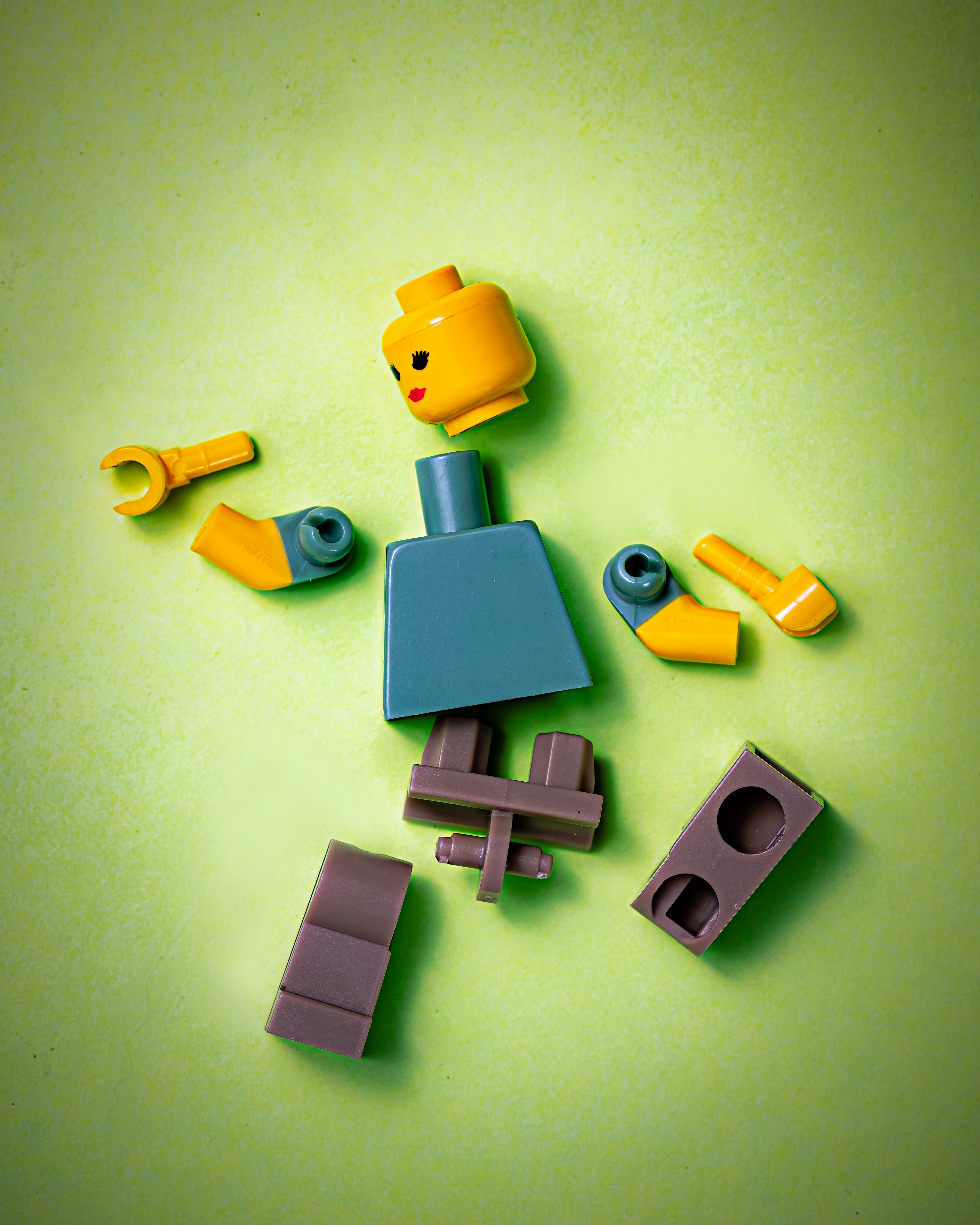


7 Things That Happen When You Don't Heal From Your Breakup
What actually happens when you skip the real work after a breakup: old attachment wounds, low self-worth, patterns that follow you into the next relationship, and why EFT is the tool that actually moves it.
read more
Emotional Gravity: Why You Keep Getting Pulled Back to the Same Kind of Pain
Behavioral expert Chase Hughes calls it emotional gravity: the reason you keep getting pulled toward the same kind of pain. It's not your intuition. It's your nervous system mistaking familiar for safe. Read the full breakdown.
read more
5 Red Flags Your Ex Showed You That Should Make You Glad You Walked Away
Missing your ex and wondering if you made the right call? These 5 red flags are a reminder of what was actually there, and why walking away was the right thing, even when it doesn't feel like it yet.
read more